
Lament Resource
Lament isn’t merely expressing our pain. It’s bringing our pain into our relationship with God.
Why Lament?
Lament is a vital part of our prayer, worship, and relationship with God. Biblical lament provides a pathway for drawing near to God as we work through the brokenness of this world.
Grief often begins in the gap between what I long for and what is.

What do we do with the gap?
As humans we have a tendency to suppress our pain or to focus on our disappointment in a way that fuels bitterness, grumbling, and discontent. Biblical lament takes the brokenness seriously, but acknowledges God’s character and invites God to work in us and in our circumstances.

We often want to jump straight from our grief to experiencing hope—without going through the necessary process of lament. But lamenting helps us address the brokenness in and around us honestly with the Lord as we move towards hope. Lament does not necessarily make grief disappear. It keeps our grief in relationship with God rather than allowing pain to quietly form false conclusions about Him. Jesus does not simply lead us out of grief. He meets us in it.

Features of biblical lament
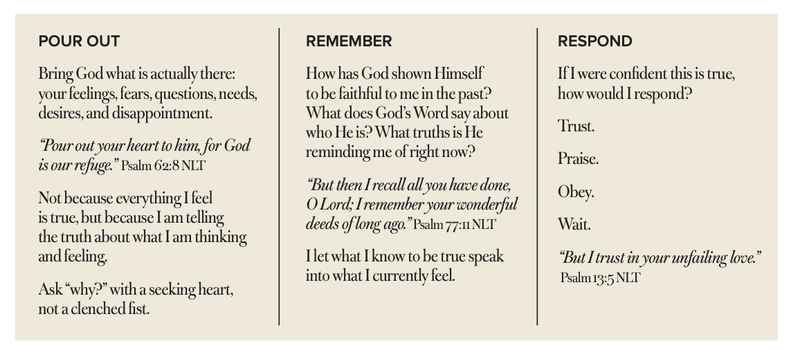
Lament is a practice, not a formula.
These movements do not always happen neatly or all at once. Sometimes, like Psalm 88, faith simply keeps talking to God in the dark.
Take note of the patterns we see in these laments.
PSALM 13 · PSALM 22 · PSALM 42 · PSALM 43 · PSALM 77 · LAMENTATIONS 3
Notice when the author is pouring out his feelings, remembering who God is and what is true, and responding in praise or trust.