Pursuing imPOSSIBILITY with David's Table
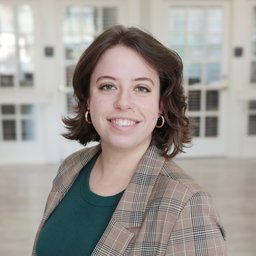
Lead Videographer
Description
In this episode, Whitney and Scott sit down with Katie Mitchell, the executive director of our serving partner, David’s Table. Katie shares the heart of David’s Table to connect families of those with disabilities to community and local church, and to provide respite, compassion, and hope through Jesus Christ.
- David’s Table is one of our serving partners and “exists to demonstrate the love of Jesus to adults with disabilities and their families by creating community, connecting to resources, and making disciples.”
- The name “David’s Table” comes from 2 Samuel 9, where King David invites Mephibosheth, the disabled son of his friend Jonathan, to eat “regularly at David’s table, like one of the king’s own sons.”
- The gospel empowers the local church to look for opportunities to provide possibilities for families of those with disabilities when life can feel full of impossibility.
- Families connected to David’s Table learn to hold both joy and sorrow simultaneously—an ability that is relevant to all believers.
We like to story tell because stories are important. They're super important. Jesus used that to teach, to keep, to write on our minds. And those stories are important. That's that's how we connect and how the connection I want them to see is not David's table. I want them to see that the Lord is doing these things in their life, that the people of David's table are the same as them.
In fact, if I can get them them to understand that we are don't have it together, don't have super capes on and aren't doing don't have any kind of superpower, it's easier than to talk to them about trying church again. Well, hey everyone, welcome back to the Grace Church members podcast on your host Whitney Manus here with Scott. How are you, Scott? Hey, Whitney. Good morning. Good morning.
Good to see you. And our guest today is one of those names that I'd heard around our church, it seems like dozens of times. And then finally got to make the connection with her recently, Katie Mitchell. Katie, thanks for being here with us. Thanks for having me. Absolutely, and I'll have you introduce yourself here in a minute, but I'll try to set you up.
You are executive director of David's Table, and we will get to talk a lot about that here in a minute as well. But you're also a member at Grace at our Pelham campus. How long have you been at Grace? Tom and I argue about that, but I think it's about 12 years that we've been there and I want to say maybe 11 years as members. OK, that's awesome.
So you're you're familiar. She is a listener of our podcast, so we're grateful for that. And now she finally gets to participate as well.
So, Katie, tell us a little bit about your family, about your background, and just how you entered into this role in the world that you're working in now. OK, well, let me go back a few years. A lot of people who know me know that I'm retired from the Navy. I was a chief hospital corpsman in the Navy. My dad was also in the Navy. And I actually came here from Virginia many years ago with my three children, then three children, and moved to my dad's hometown of Piedmont.
And Becca, who a lot of people at Grace know, if you've been at the Pelham campus and seen her driving around in her power wheelchair, hugging everybody, you've met Becca. But came came to be closer to family and get connected. And now my family looks very different. I spent some time as a single mom after going through divorce, which impacts families with disability disproportionately. To most families, it's still pretty high period, but it really hits families impacted by disability pretty hard.
And I spent a good amount of time where it was just Becca and I, and I experienced a lot of things. And one of the greatest things I experienced was just as Becca was entering high school, I met Skeeter Powell. Like a great thing in of itself, isn't it that? And Becca met him too. And I will tell you, Skeeter is one of the most welcoming people on the planet. I don't know that you could find someone who has a more open and welcoming heart.
And so he really disarmed me with his welcome and welcomed not only me, but Becca completely, exactly how we were. And I was pretty rough around the edges. He also was critical and getting me involved in Young Life. And that's really how the whole journey towards David's table started was in Young Life. I ended up joining Young Life Capernaum, which is where I met Tom, who I would later marry, and Skeeter would marry us and we blended our families together. And now all throughout Young Life, as a leader, working with Skeeter, getting to know families, connecting with a lot of other families in similar circumstances, we got to be a pretty tight knit community.
David's Table was in existence then, but it was more of a come alongside Young Life so that Skeeter could lend some additional resources to strengthen the Capernaum community. And Capernaum is just the part of Young Life that serves high schoolers with disabilities. And so skaters started that. David Sable, How long ago? It's been 15 years. 15 years. 15 years ago and it's it's just amazing to see what God has done through his faithfulness. I'll tell you that's the key when it comes to anything.
We know that through the way God shows up for us in all seasons. Skeeter really models that and today that's still really what David's table is about is faithfulness to show up in the lives of our families and our friends consistently to be counted on so many things in the world let you down and and so it his faithfulness to continue showing up even today. And it's amazing at 82 or he's going to be 82. I think this just in a couple weeks. Yeah, really outing him on this podcast. Oh, I'm so sorry.
He's going to be mad that I So if you don't know, I believe it's October 13th is Skeeter's birthday. It's all wisdom now that that's what the age represents. It's just wisdom and. I don't know. People will say that. You know what I say, it's experience on how not to do it.
It's what was stumbling. That's right. It's still effective, that's for sure. Yeah, that's great, Katie. And and your feeling has grown a little bit since then and you are now. How did you end up as executive director of David's Table?
Take us the rest of the way. Well, during COVID, which everybody remembers COVID, we ended up connecting on Zoom. There was this fear that our already isolated community would completely fall apart.
So we began Zooming every Monday night using the Bible Project videos through the Gospels as a point of connection to replace our Monday night meetings that we would have with Capernaum and David's table. And it was highly effective. We doubled in size. We ended up having a virtual camp. David Merritt Anderson was our speaker. We had breakout rooms for small community groups.
We had a whole weekend. Grace was a big part of that. We did. We did hygiene kits for prisoners that we worked with as a mission serving opportunity with Grace. Our campers did 200 of them and I'm going to brag without any mistakes. We're perfect.
That's awesome. It was just amazing. And out of that, we gathered together at Tomomise home in Greer, about 15 or 20 of us and said, God, what, what do you want us to do? David's table was there, but it wasn't really any had didn't really have any structure or substance.
So a beautiful donor said if you can match this money and figure out how to sustain that pass Skeeter and create a more structure to come alongside these families, I'll give you $20,000. The matching the money was really, really easy. Believe it or not, that was not the hard part. The hard part was getting consensus on who are we, what do we see? God's plan for us in the world and serving these families and loving them, and that really took a long time to decide more of what we were not than what we are.
So were you coalescing a mission statement at that point? That was the hardest thing we did was come up with a mission statement. And I love our mission statement. What is it? It is to demonstrate the love of Jesus. I'll give you the rest of it, but demonstrating the love of Jesus.
And we do that by creating community, connecting to resources, and making disciples. So those are three of the ways we do that. But under everything we demonstrate the love of Jesus, and that can be hard.
Yeah, absolutely. So before we go any further, first of all say that David's Table is one of our local partners with Grace, which is why we're talking about it here on our podcast. And I would love for you to also tell us just where did the name David's Table come from? Because I I love that. Mesaba, chef, see if you could say that several times.
But second Samuel 9. So King Saul and his son Jonathan, they're dead and gone. David is has taken the throne and he is secure in power and he asks if there are any living relatives left in the family.
Now, normally under that context, the expectation would be execution because that would be typical for the culture of that time. But if we go back, we remember her, that David and Jonathan had a very, very special relationship and they had made promises to each other and they loved each other dearly. It is a a beautiful brotherly love that existed in their relationship.
So the Seba chef is found and brought before King David and he is mortified that him with disability, he had been dropped, his nurse was running away fleeing the attackers and he was dropped and he was crippled in both feet. So the stigma not only of being one of the surviving members of the deposed ruling family, but also having a disability, his shame would have been significant.
And David not only restores his life and and is such a picture, such a picture of what Jesus does for us, but restores and redeems his life. He invites him to do to have all his meals at his table at the King's table. So David's table is the same. That's the the picture that we're offering our families. We're saying let go of your shame. We see you, we love you.
We see you with your brokenness outward and inward. And you are welcome. You're very, very welcome. Yeah, which is just so beautiful and like you said, such a picture of the gospel, but along with your mission statement really does show us the heart of what David's table is after. Another thing I'd love to clarify, I think in our context we have Mosaic and we talked about those with special needs and disabilities, and I think David's table sometimes gets lumped in, but those are separate entities.
Tell us a little bit about how David's table works with Mosaic and is partnered with Grace, but then how it is also not Mosaic and it's different? I love Mosaic, my daughter's which I hadn't even mentioned Dakota, but Dakota is a new addition to our family in the last three years and God blessed 2 old people with a his mind and ours and it's a beautiful thing. But Dakota and Becca are a part of Mosaic. They are part of Group Life Mosaic at Pelham and they are members at Pelham. They also attend the Mosaic Inspire and they work at Inspire Coffee House.
So we are a Mosaic family. We are also a David Staple family and my girls go to E 210 and many of the other David's table activities as well that are outside or between the Sundays. We're big about being between the Sundays on Sundays because there's a lot of life outside of Sundays. And I know Grace is big about being between the Sundays as well. That's right.
So the way we come alongside Mosaic, a biggest way and that would it, it would look like on a Sunday, is transportation. We help to get many Mosaic adults to worship. We help to provide that support and transporting Front Porch residents to Pelham for worship. We help with volunteers or anything, pretty much anything Joe Clary asked me that he needs, I'm willing to do him Merit Yvette, Dana Humphrey, all of them are, believe it or not, David's table volunteers as well as mosaic staff and and and people.
So there's a lot of, I call it cross pollinating, but but there's a lot of mixture, which is beautiful and it's great. That's helpful. But David's table is 1. Grace Church is 1 church that we partner with. We have about 12 to 16 churches, which I can't list them all. Our goal is is actually to partner with churches to get families in their church.
Grace has a great onboarding with Mosaic, but many churches do not have a disability ministry. And I'll be honest with you, you don't have to have a disability ministry to be welcoming to families with disabilities. So we love to bridge that gap and help our families find a church home. Katie, if I could interrupt, is that is that one of the reasons why COVID and Zoom was so effective is because it created a new paradigm for some families that knew other families to start spreading the word that may not be connected to a local church?
Yes, very much so. The parents were as eager to be on the call as their adults. If you would have said here, let's go on a technology none of us know how to use and have intimate fellowship and discipleship over 18 months. It was crazy. It was all of us were rushing to be together. If everyone can remember how that was, then God.
God showed us for the first time possibility and we've never really looked back. We haven't been afraid to try whatever aligns with connecting folks, even if it seems ridiculous like Camp David. Think about it. We went in 2021 during COVID. Yeah, tell us about Camp David.
So Camp David Merrick gets 100% credit. We had a virtual camp in 2020 where we wanted to give our adults an opportunity to connect in some way that would be super fun, have a chance to have a larger visibility and connection outside of Zoom. So we used Rocky Creek Church. We had a parade which we all dressed up in superhero costumes. My mom got her wish and got it. Has pictures of me in a Wonder Woman costume and A and A and a mask.
And like Amy Romasca who a lot of you all will know too, she's been apart from way back. We all dressed up and they came through in their cars, didn't get out of their cars and picked up their camp kit. Went back and stayed with us for a Friday night. We had a karaoke and fun on Zoom Friday night and then we had teaching all day Saturday that Merritt taught in two blocks, had small groups and we did a serving project which we turned in on Sunday at Grace Church and gave them a T-shirt and a bag lunch.
And we just thought that was the greatest though. And then Merritt said, hey, next year let's do it in person and invite the whole family. That statement changed the course of David's table completely changed the course because we had only like Young Life just really thought about the adult and many ministries that you'll find across the country focus solely on the adult and he broaden our perspective and I am so, so glad that he did.
So in 2021, not having any clue what we're doing using Skeeter's relational collateral, we got Carolina point to let us come on the weekend after Labor Day in the middle of COVID. I find difficulty telling this story without crying, but I'm going to do my best. So a couple days leading up to Camp David with all the planning that we had, never really having any idea what we were going to do, we lost over a third of our volunteers to COVID. The ones we didn't lose to COVID before we got there, we lost more.
When we arrived, we found out most of our volunteers weren't going to be able to come. So Friday night, I'm standing up with a microphone looking at a dining room about half full of parents and adults who took a chance on us and came up in the middle of COVID. And I'm going to have to tell them that that we have to go home because we don't have enough people to serve unless they're willing to serve.
And so I asked the parents, would you be willing? And every parent in the room stood up and dads went in the kitchen to serve. And mom stayed with their daughters. And moms went in the kitchen to serve and dad stayed with their sons. And we had camp and the camp crew joined us. And I, if I tell you all that people just came out of the woodwork to come and serve and love our families that week, we had 181 people who ended up being there.
And it has forever ever changed how I look at my own relationship with the Lord and and just his faithfulness as such a depth and breath for me that I can't I can't explain outside of what happened that weekend. Yeah, we really could spend. I mean, you have so many stories like that and we could spend such a long time on them, but it's so powerful. And what as you're talking, what I hear you describing is really this idea of God making the upside down Kingdom the the reverse economy, because we think of COVID and we think of impossibility.
We think of that was not fun. We do not want to do that again. But you were talking about how God used that to do great things, good things, brought so much life and fruit from something that seemed very hopeless and unfortunate.
And but that's just the business that he's in, isn't it? You know, he's, he's always taking those things that don't seem like they will bear fruit. And he is bringing gardens out of ashes. And you know, to use all of the analogies. Or out of a stump, right? That's right.
I mean, you could just see it's the redemption story over and over again. It's the prodigal son. It's so many. So you could use, there's so many metaphors, but it is a story ultimately of redemption. And now, so 2025, we just did Camp David again. Give us a little update.
How did that go this year? Well, we have now a clarity of purpose and knowing as God has LED us as we've grown up and learned all the ways to do it wrong. And we I will say that we will never. Our goal is not performance. We feel that our messiness is a picture of being authentic and real and it makes us approachable.
So we never ever want it to be perfect. But we did have 412 people at at camp and over 100 more people stayed the whole weekend this year versus last year. We have beautiful volunteers that keep showing up year after year.
But the clarity that we have now is the purpose of campus is is very intentional and focused on our parents. We go to camp to provide on site respite. Yeah, where we're breaking the whole family out of their comfort zone, putting them in a different environment and connecting them to one another so that they can get real and vulnerable, hear from each other, share their wounds, bind each other up, encourage each other. And we pray the Holy Spirit comes in such mighty power on camp and just there's this huge bubble of protection.
But that they will hear from him. That is our deepest hope. A lot of times it's just the beauty of connecting with others who'd get you that start the conversation, but give us that that leverage to then continue pursuing these people for the gospel. Right. And if if you all heard our last episode with Davis Craig, he was talking about how we do student retreats.
But that idea of getting outside of our norm, you know, maybe we put our phones away a little bit more than we normally would, but we're in space with other people. And we asked the Holy Spirit to come with us. And then it's amazing what happens, you know, when you really create that space, especially life is busy. And especially for families of those with disabilities, like it can be chaotic.
And so just here's a little Oasis where you get to be with your family, you get cared for. You don't have to worry about dinner, you know, and so you can really just fellowship with one another. It's beautiful.
So take us into what these parents are, are feeling and why a weekend like this is so special because a lot of folks when we, if we see an individual, whether it be a child or an adult with disability, that's, that tends to be all that we see. Yes. So we don't see the family.
So tell us, tell us, take us into the window of the family and why this movement from the individual to the family has been so catalytic and so defining for David's table. Those are good questions. So the, the, the main thing to understand is that it is caregiving, whether it is in the context of a family with a, with a disabled adult or child, or if you're caring for an aging parent or if you're caring for a spouse with chronic illness.
There is it, there's the never ending and there's, it can be very difficult to see in your daily circumstances anything beyond the work or the next thing that needs to happen that it's hard to, to connect to joy. It's hard to connect to any, any thought that you don't see an end to it. It, it and you love the person. It's not that you don't love the person, but there is, there is a lot to that. And and Becca requires total care. She's completely dependent.
She's very independent in a lot of ways, but but requires a lot. And it's physically demanding on people who are aging. I have a mom who's in her 80s who has twin boys in their 50s. Camp for her is fun for them, but also fun for her. It's a chance to truly have fun and be a part to to really cast those burdens down to go to the well to get that refreshment. It is an opportunity to be connected to joy and then hopefully connected to. I don't want our families to be connected to 200 other people.
I want in my prayer that we pray as a team over and I pray specifically over is that the Holy Spirit will connect a couple of these women to each other so that they can continue fellowshipping well beyond camp to breathe life into each other. So that when you had a day like for me, when Becca said mom probably 150 times in 10 minutes, I have another mom whose daughter does the same thing and we'll just talk and she totally gets it. So, so campus is kind of what Whitney said, why it's so important is it is greenhousing, it's, it's bringing everybody together in an environment and fighting the Holy Spirit and to work in and amongst everyone who's there to develop and create relationships and connections.
We, we're just throwing fertilizer and water on it. We're we're not. He is ultimately making that happen, but they have to be there for it to happen.
So. Well, and because the like you said, the life, the caregiving, it's, it's so all consuming that there's not a lot of margin or space to go find these relationships. So then some of the more difficult parts of the caregiving get magnified, some of the loneliness and frustration and and the joy seems to be further and further away.
So you're bringing like minded folks together, but you're also doing it with this encouragement, gospel focus, ultimately pointing to this, this greatest hope. So it's not just, it's not just commiserating. Right, exactly. It is not despair in any way. It's so joy was our theme this year. I would hazard a guess that there'd be very few people who, if we just plopped them in the middle on a Saturday at Camp David, who wouldn't get that.
It's all about the joy. And it's sometimes difficult to reconcile joy with the circumstances of the individuals that you'll see having a blast. All of them. The parents walk in like way down. You can't see me.
So I'm trying to model what you can't see. Sure, but they walk in bent over and they leave just so much light and and do we want to connect them to Christ? Yes, we do.
But have you ever heard people say sometimes that people are are inviting you into Christ, but they look like they've been run over and they're not very compelling, right? That's. Right. It's like, come with me, life is great, but you're not, you're not really believing them, right?
And so we're saying, yes, your circumstances are hard. We are not in any way not recognizing that. So we can relate. But we're saying you can have joy now. It's not just in heaven. It is now too.
He invites us to joy now. Well, it goes back to your mission statement of demonstrating. Yeah, not not just telling, yes, and and trying to convince you with my sad face of some kind of intellectual truth, but I'm demonstrating and living in that joy that can only come through community, God's hope, the Holy Spirit, all of that.
But but that for someone who is outside, maybe outside the faith or outside of really living in that fruit, like they're not going to understand all those steps. They just need to see it. Right, right. It's a visible representation of what we that's why it's important. And and we didn't know that when it started. We took a step of obedience.
That that is our mantra is that we have no idea what we're doing. We're trying to take the next step of obedience. We're we're trying to stay missionally aligned and focused. That is my ultimate role as executive director. I had no idea being a mom of a very autistic daughter and a Navy chief would make you good at doing that kind of focus. Because I say no to stuff a lot that all seem like good things.
Like do we care that our folks get Social Security benefits, have housing? All of those things are important. So connecting to resources is making sure we have relationships with those agencies.
But we don't do it. You know, we we put you, we try to develop relationships that have fruit that will help you in that situation, provide that practical, tangible what you need in the moment, but but remind you that's that's not where your hope is. Whether all the problems with housing, it's, you know, solved. I love front porch housing. That's a beautiful picture of that. Housing is important.
A lot of things are important, but they're not the most important. And and looking at our circumstances and judging God's goodness for us is definitely not the way to go. No. And in any given moment, that's a shifting thing anyway. Yeah. And I love how you talked about just expanding this view of caregiving and helping even our audience say, Oh yeah, if I've cared for someone with a chronic illness or if I'm in that night, maybe I'm the one with a chronic illness.
Elderly parents, so many of us connect with that like that. That's a that's a theme that isn't is easily seen across what we're talking about this. Morning. Yes, very much so. And especially that idea, I think what David's table with Mosaic, what our community and families of those with special needs do so well is holding the joy and the sorrow intention because the rest of us are like, we have to choose. We have to pick one.
We can only do one at one time. We're very like monolithic in that way, but it's really exactly what you were talking about and it's the picture that Scripture offers us that there is real joy to be had now because of what Christ has done for us. All of that is very real, and the pain and the sorrow is still also real. And both of those things can be true at the same time. And another thing that you have told me that I loved is just that idea of possibility versus impossibility. Will you talk a little bit more about that and just what that means to you?
Well, there is a lot of in the world that I live in and and our families live in about, you know, what can happen and what can't happen, right? And so I love that God is a God of impossibility. And so we, we try to connect folks to see beyond what they're dealing with now to where they would like to be and, and, and challenge them to, for example, get connected.
Now that might seem like a super thing, easy thing for most people. You're thinking, well, there's opportunities and I get connected. It can be scary when your hope is in your circumstances to try to get connected. It seems you'll say there's no way these people are going to accept me. There's no way they're going to be able to provide for me and my child who has these 50 million things they're afraid of. There's no way we're going to be able to get into church.
There's no way we're going to have a better life or be smiling and laughing and and that he will have friends and then I could have people that can relate to me. There's no way that that that whole language of that it can't happen is all born out of all the trauma and experiences they've had in the past. And you do have to get through that. You can't to say, well, just believe. It doesn't matter.
But what what you do have to do is you have to keep inviting and you have to keep. You can't give up. You have to be persistent. You have to continue to push and say it is possible and and build on when you are able to make those connections. Really celebrate that. Hey, you guys came.
It's great that you came. Let me introduce you to a few people, follow up, reconnect, get them to come to something, then enjoy. Call it out. I love to call it out on people. When I see people who told me they couldn't do something or that their child would never do or whatever, I love walking up and saying, hey, they're doing it now, you know? Is to help them remember and celebrate and not just move on to the next impossibility.
Yeah, right. And, and we need and we point constantly about how God has provided we like to story tell because stories are important. They're super important. Jesus used that to teach, to keep, to write on our minds. And those stories are important. That's that's how we connect and how the connection I want them to see is I want them to see that the Lord is doing these things in their life, that the people of David's table are the same as them.
In fact, if I can get them to understand that we are don't have it together, don't have super capes on and aren't doing, don't have any kind of superpower, it's easier than to talk to them about trying church again. Because a lot of our families, church is just a place they just do not feel they can be at. That's a big impossibility and. I know that's a little bit of part of your story and like you were saying that that is it's based on real experiences and good people, simple people trying their best to have just failed to take care of this community.
You know, And I think what's interesting is you're really talking about long term relationships, Like we're not solving anything really. We cannot fix disability, but you're holding out relationship and that this really happens on a weekly basis. So we've talked about camp dated real quickly. Will you mention just some of the other things that happen on a weekly basis that data's table is doing?
So I said faithfulness was. Important. That's who Skeeter is. That's who David's table is. Our adults come out of high school with very little opportunity to connect after that. Most of them don't go on to jobs.
Most of them don't drive. They don't launch. They're still at him, so they have very empty calendars and limited opportunities to connect.
So we have 48 weeks a year. We have 9 to 11 hours of free programming every week. Monday nights is our discipleship ministry, E 210 for Ephesians 210. We are God's masterpiece, created in you, in Christ Jesus, to do the good work city planned for us long ago and so that our adults see themselves as uniquely created and powerful to and created for good works for, on purpose, for a purpose. We have now 4 campuses. We still have a virtual campus that we kept through COVID and had 22 on last night.
Rocky Creek is our Greenville campus. I'm pretty sure they had over 65 last night. Piedmont, which is our newest campus, we had Anderson. We started at Grace Powdersville in January of 20-3 and then moved in September of last year after camp to Kaleo Church in Piedmont where a family wanted to anchor us and and breathe into us more. We came there with about 18 to 20 a week at Powdersville and when we moved 6 miles South and this family jumped in all the way, we had 52 people last night in the room.
And so we're we, that's our big night and a lot of our adults are connected to that. And we have parents groups that are meeting in conjunction with that thriving moms group that meets at Rocky Creek, a parent group at Kaleo that's very well connected on Tuesdays. We probably not today with the rain, but I don't know, they might be out there. We have adaptive tennis at McPherson Park. We have a tennis instructor that we has been a part of the ministry for a long time, followed up by lunch at the mall.
So that's about a 2 hour block. On Monday nights are two hours and then on Thursdays at Fairview Baptist they host our art in ukulele 2 hour session and we have an art project that we do. And yes, we have a ukulele band called Fret not Eucharist.
And so fret not for don't worry about anything. Be anxious, you know, but and said pray but also fret because fretting is you have to be able to hold and a lot of our friends can only strum. And yes, anyone can play ukulele.
So do you play? I do not, not regularly anyway, but it's a joyful noise. And they're on, they're on Facebook on Thursdays live so other folks can join in. We have a, a beautiful orphan ministry in Peru that's connected to us, that connected to us on Facebook and they special needs orphans and per.
But it is just amazing how God does that. That's right. And then we do, we try at least once a month something like Mosaic Supper Club, very similar to Mosaic Supper Club. We have host churches that will host respite events for us.
So once a month we have a 2 hour respite night, which will be from 6 to 8. It's a drop off event. We feed and have some kind of activity. Bingo, karaoke. Greenville First is one of our churches. Elevation is one of our churches.
As I said, Fairview Baptist has done a lot rare place of God. That church is doing a first time event. City View Church, First Presbyterian, You know, we try to have one every month so that parents could have a date night trying to feed those marriages so they don't fall apart or the all the single moms can get together and have a mom's night out but but they can count on it.
So again, that faithfulness, the pattern of just continuously looking to see that we have something some way to keep them connected, something to look forward to. Yeah. And what a picture do? Exactly what you said, Sunday to Sunday, in between Sundays, that is where church is happening. You know, it's not just limited to the one day, but David's table is busy. Everyone, if you don't take anything else away, they are getting it done out here.
Well, Katie, as we're kind of wrapping up here a little bit, I mean, I really love, I mean, you just have a beautiful heart for this community. Your story is so connected. I mean, I just have to recognize the ways that the Lord has shaped your life to what you were saying, your family, but then also your experience in the Navy and how all of that builds into what you're doing right now, just how he has orchestrated all of that. And I'd really just love to give you an opportunity to share with your church.
Just what would you like for us to know? How can we be praying for David's table? How can we continue to partner and support with y'all?
Well, first of all I want to. Say thank you because a good many of you do. You do support us, you volunteer, you show up. There's several of you that are attending those E2 tens on Monday night and helping to disciple and lead people to a deeper relationship with Jesus.
So thank you for that. Many of you come to Camp David year after year and give the weekend away to love our families and I thank you for that. But as we grow, I told you we have very full rooms.
So we're I'm going to Belton. I planted in Anderson two years ago. Now I'm going further South to Belton to do to a very small church to Cola church to start another E 210 would appreciate your prayers for us as we try to steward the resources we have against the needs that were being that are in front of us that that is probably the hardest part. There are so many places where tomorrow we could multiply, but we really don't have the resources to do that in a way that would honor COD.
So just pray for us that we would have discernment about where to go when in obedience when he opens doors to us and and pray for that. Also, if you have ever thought that you would enjoy on a Monday night coming. To help us it is I promise you that you will walk away having received so much more than you might think and it will truly become your joy to enter into a deep relationship with our our friends and to get to see and know some of our families, our needs. Our greatest need is Monday night to grow Monday night, which is what God is growing our Monday night discipleship in several locations.
We need more, more people who have good theology. And I am a member of our church, so I know the equipping and the teaching that we get. We need folks who are very solid and unshakable in their faith and are willing to share. We need folks who are vulnerable. We're willing to be vulnerable and share their lives as a way to encourage, and I'm not sexist in any way, but we need men. The biggest missing component in our room is the men.
We need more men to show up for these families. And if you could just say a word. About correcting maybe some of the wrong attitudes, like if someone says they might not say it but if you can sense it that they feel sorry. Or the families talk a little bit about pity and compassion. I'd be glad to. If you want to make a mom of a disabled adult or child angry, offer her pity.
She doesn't need her want your pity to see her, to see her child, to see her adult or any parent really, to see them as created exactly as God planned. Much like John 9, like you know, the blind man, as Jesus so eloquently said, you know it's not a curse, it wasn't a punishment, but to to see and receive just as you would anyone else, to to, to just love them as they are. Don't try to fix them, don't try to change them. Pity. Pity is a negative emotion, and it can create shame. And shame is something we have to fight against all the time.
Shame is the greatest enemy, I would say of anyone who's going through any kind of suffering is that it's so easy for the accuser to help us believe that it's our fault. And so when you pity me, you are saying that you're agreeing with that, and that is not helpful, right? And what do you? Need instead. Compassion, Compassion. Compassion is a willingness to sit beside, to listen, to offer what help you have.
Don't offer what you don't have. It's OK and and often we're not seeking anything other than the same thing you would for anyone else that you met. Just conversation, friendship and and to be to be treated the same. Which is exactly how Jesus. Interacted with everyone that he met. He did not offer pity.
He offered compassion. And he saw sheep without a shepherd in his heart. Bled out for people who just need to be loved and seen right and known.
It's just beautiful. Katie, we're, we're so grateful that you took the time to be with us today. It's just a good word on love, on possibility, on joy, which are things that we are ready as believers to go practice in our daily lives with everyone.
But it is amazing how God is teaching us to do that through this community who is just aware of their weakness in a way that the rest of us should be but aren't. But it challenges us to go love the way that Christ did, and they certainly are just adding so much value to our church and make us love Christ more because of the way that we see him embodied in them. Would you? Just pray for these families and just pray for our church family and anybody else that may be listening that they would just feel that joy that gets up and drives you every day, even in the midst of the challenges.
But if you could do that for us, I would love. I would love that. Thank you. Father, you're a good, good father, a good, good father to us all. I pray first and foremost that we never, ever forget that. We never forget that you're faithful.
You're so, so faithful. Faithful to show us your love by sending us your son. Let that be what drives us to you, to celebrate the victories of the day, to see Your goodness and the little things, and to be anticipating You to be looking for You. Let us not have our eyes down to the ground, God, let us look up and rejoice. There is so much goodness if we only open our eyes to see it and not aware of Your very presence with us. Always, always I pray today, first and foremost, that everyone who hears this looks for you, looks for you in their day, because I know you will be found and if they find you, they will find the joy, the peace, all that you offer us just by anticipating and looking for it in Jesus name, Amen.
Other Ways to Listen

